

The ESCALATE consortium held its biannual meeting last week at the Turkish research institute Tubitak, situated on the outskirts of Gebze, just east of Istanbul. The two-day gathering centred on updates from the work packages and pilot activities, as well as a tour of the local research facilities.


The ESCALATE pilots, which form the core of the project, are making steady progress.
“Let us not forget that our plans to operate our long-haul zHDVs in various climates and across different routes are extremely ambitious, and we have already come a long way,” emphasised Ahu Ece Hartavi Karci of the University of Surrey and technical coordinator of ESCALATE, during her opening remarks. Considerable steps have indeed been taken, and the consortium is eagerly anticipating the first pilot rollout, expected to begin at the Finnish Port of Kokkola, just outside Helsinki. These initial basic tests will extend into the wider Helsinki region before the full long-haul pilot can commence, involving a daily service of roughly 530 km.
Comparable daily operations are planned for the two missions of pilot six. Trucks from ELECTRA are expected to cover around 500 km per day across the UK (from Dundee to South Wales) and between the German cities of Flensburg and Stuttgart. Colleagues from ELECTRA reported a positive outlook on certification and homologation, which are anticipated in early 2026.
Another Western European cross-border mission is planned under pilot five, running from Geneva to Barcelona. The build-up of the test vehicle is advancing well, particularly the e-Axle developed by project coordinator FEV, as well as the digital tools designed to model the expected route. These will help predict vehicle range and driving characteristics such as energy consumption. Further progress has been made across the other pilots, though these details have been omitted here for simplicity.
Digital tools, total cost of ownership, and refuelling solutions were among the key challenges discussed during the work package updates.
One work package focuses on integrated assessment platforms and harmonised methods (LCA, S-LCA, TCO) to evaluate the environmental, social, and economic impacts of zero-emission heavy-duty vehicles. It also proposes a standardised LCA framework for vehicle homologation, identifies standardisation gaps, and establishes KPIs and KIPs to guide impact assessment. Expected outputs include aligned methodologies for pilot projects, policy-relevant LCA proposals, scenario analyses, and strengthened knowledge of standardisation and business models.
Another work package is advancing digital twins and AI-based control strategies to improve modelling, prediction, and integration across all demonstrator use cases. It also evaluates optimal powertrain architectures and is developing an open, AI-supported multi-domain platform to accelerate development, enable real-time predictive maintenance, and support early-stage design recommendations.
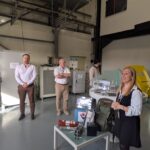
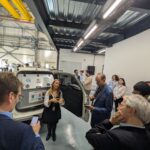
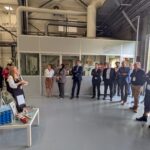
Interesting tour of the research facilities
The Turkish hosts at Tubitak presented their hydrogen research facility, which features several ESCALATE-related projects, including a range of hydrogen fuel cells developed in-house. Hydrogen technologies have also been integrated into a test vehicle and a retrofitted commercial internal combustion engine car. The sunny afternoon walk around the extensive research grounds provided further opportunities for technical discussions and insights into the local research activities.
ESCALATE looks forward to showcasing these developments at events in 2026.
Alongside major progress in planning a webinar series, ESCALATE aims to participate in several key events, including TRA 2026 in Budapest, ITS Europe Congress 2026 in Istanbul, and its own webinar series scheduled for Q1 2026.